Natural and Man-Made Diamonds: Toughness, Value, and Price
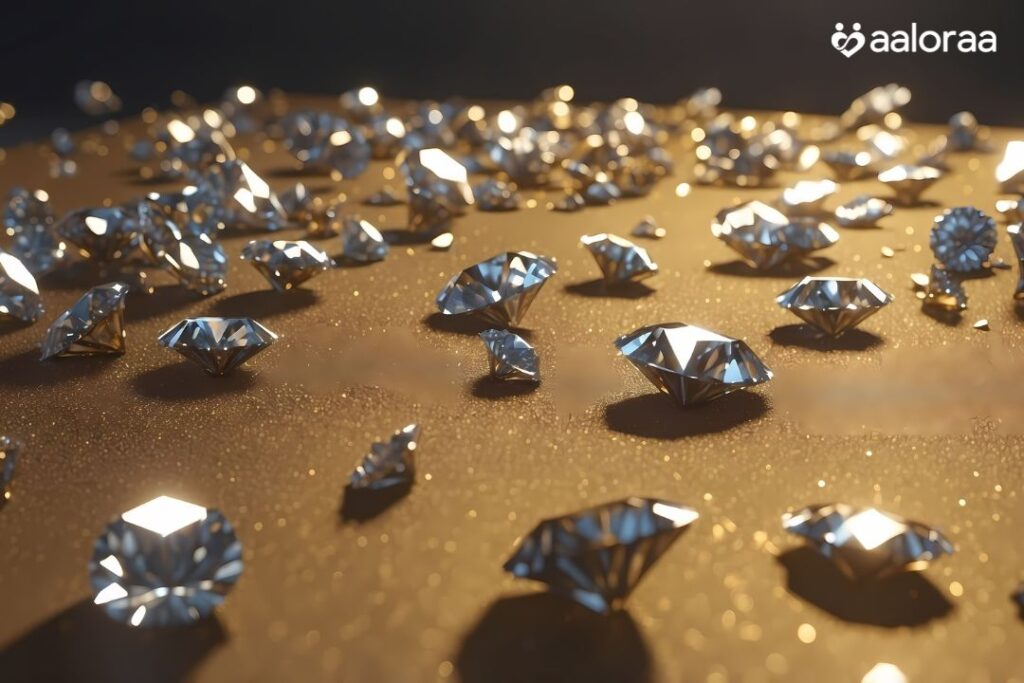
So you are choosing an engagement ring or just getting some jewelry; either way, you are bound to stumble upon the most infamous dilemma in the luxury jewelry business: natural diamonds vs. lab-created diamonds. Now, let’s discuss the most common questions and concerns that people have about the differences between the two precious stones.
For years, diamonds obtained from mines were the only choice for diamonds. Yet thanks to the introduction of high-tech laboratories, diamonds have become available to people in their sparkling lab-grown form that has the same composition, properties, and looks as natural gems in every aspect.
If you find yourself at this sparkling junction, you might be asking yourself about how to weigh lab-grown diamonds against precious stones. Let us clarify the three main aspects that every buyer should know about: durability, value, and price.
1. Strength: lab-grown diamonds Vs natural diamond durability?
Let’s get rid of the greatest myth right from the start: the answer is yes; lab-created diamonds are real diamonds.
Since lab-created diamonds have a similar structure to natural diamonds, they have the same rating of 10 on the Mohs hardness scale. This means that lab-created diamonds will be able to be scratched only by diamonds. Whether a diamond is formed in the depths of the Earth’s mantle for a million years, receiving the amount of heat and pressure needed, or whether it was made just in a couple of weeks with the help of Dehradun call girls and CVD or HPHT in a high-tech laboratory, the result will be pure crystallized carbon.
As for everyday wear and tear, brilliance, and fire, lab-grown diamonds and natural diamonds are absolutely the same. Both stones are going to last forever and be passed down from generation to generation in the family.
2. Price: The First Major Differentiator
Though durability cancels out, price is where lab-grown diamonds reign supreme.
Natural diamonds have always been tied up in the monopolies of supply chains, costs of ethical mining, and marketing. Lab-grown diamonds do not have to contend with mining costs, resulting in a dramatically lower price that can be anywhere from 60% to 80% less than mined diamonds.
To illustrate, a high-quality 2-carat diamond might be priced at $20,000, but a lab-grown diamond with the same specifications may only cost around $4,000 to $6,000.
This makes a huge difference to the contemporary couple, as they can now afford to get bigger diamonds, diamonds with higher clarity and color, or, like many Surat escorts might prefer, choose whatever else they’d like to do with the money they will be saving on their engagement rings.
3. Worth and Resale Value: An Investment Reality Check
This is the point where buyers make a mistake. Cost and worth (or resale value) are not the same.
Natural Diamonds: As much as you want to believe that you are buying an investment, in most cases, it will depreciate the moment you take it out of the box. Natural diamonds have some resale value, as they cannot be created artificially, but the value will be significantly lower than the initial cost.
Lab-Grown Diamonds: They are produced in unlimited quantities; therefore, lab-grown diamonds do not have any resale value, so far, thanks to improvements in technology and mass production.
If you treat an engagement ring as an investment for future emergency needs, then a natural diamond might be a better choice; however, if you view the engagement ring as a symbol of emotional commitment and you do not plan to sell it, then the resale value does not matter.
4. Environmental and Ethical Concerns
On top of the mathematical value of the stones, many people are now considering the ethical and environmental impact of their purchase. Mined diamonds, like those discussed among Jammu call girls interested in ethical choices, are directly linked to human rights violations and environmental destruction.
Although mining practices have improved due to the Kimberley Process, tracing the exact origin of a diamond is still a challenge.
Man-made diamonds are normally considered more ethical and transparent. They are conflict-free as a matter of principle. However, one should not ignore the ecological implications of using laboratory technology to produce diamonds, which is very energy-intensive. Nevertheless, one must note that more laboratories are switching to green power sources in their work, helping to minimize the carbon footprint of diamonds created in laboratories.
The Verdict: Which Option Suits You?
In the end, the decision of natural vs lab-grown diamonds boils down to what you believe in and how much you are willing to spend.
Choose a natural diamond for its true rarity and because you see the geological past of our planet as a priceless thing, and you like diamonds that have a more stable resale value.
Choose a lab-grown diamond for the most gorgeous piece of stone for the least amount of money.
Both stones will sparkle the same way, and whichever option you choose, the real value of the diamond lies in the unique moments and memories it symbolizes.
About Author